
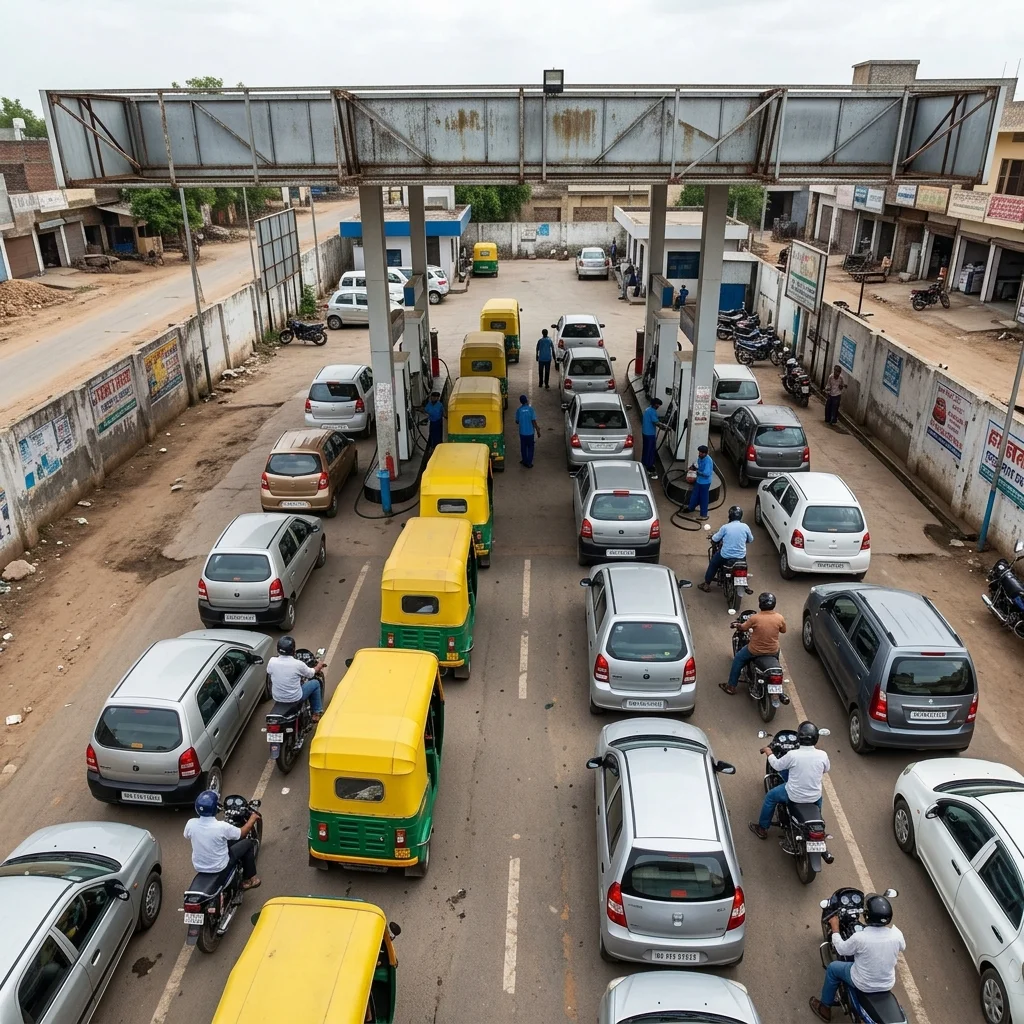
Across Indian urban corridors, CNG vehicle owners lose an average of 45 to 90 minutes each week standing in avoidable fuel station queues. While queue length is often blamed on high vehicle density, operational data reveals that a significant portion of lost time comes from subtle driver choices and misunderstandings about station mechanics.
Whether driving a private passenger car, a commercial taxi, or an auto-rickshaw, avoiding five key missteps can drastically cut down your weekly refueling overhead.
1. Joining the Nearest Station Blindly Without Checking Nearby Alternatives
The most frequent error drivers make is pulling into the first CNG pump visible along their immediate commute route. In major Indian metro hubs and industrial belts across Gujarat, City Gas Distribution (CGD) networks like Gujarat Gas, Adani Total Gas, and IRM Energy often operate multiple stations within a 2 to 4 kilometer radius.
Because major arterial roads draw heavy traffic flow, main-road stations frequently develop 15-to-20 vehicle queues. Meanwhile, a station situated just 1.5 kilometers off the main avenue - or managed by a parallel CGD operator - may have empty dispensing bays and zero waiting time. Checking alternative pumps nearby before taking a turn often saves 15 to 25 minutes of static idling.
2. Misjudging Dispenser Nozzle Rates and Island Configurations
Not all CNG pump lanes move at the same speed. A station with 4 dispenser islands might appear large, but lane throughput depends heavily on whether the pump operates online pipeline connections or relies on mobile cascade storage (Daughter Booster Stations).
- Online Pipeline Stations: Connected directly to high-pressure steel trunk pipelines, these pumps maintain a continuous 200–220 BAR pressure level, allowing fast 3-to-4 minute fills per vehicle.
- Daughter Booster Stations (DBS): Dependent on mobile cylinder cascades brought by trucks, these pumps slow down significantly when cascade cylinder pressure drops, causing dispensing times to double to 8–10 minutes per car.
Joining a 6-car queue at a low-pressure daughter booster pump will take twice as long as joining an 8-car queue at a high-pressure online pipeline station.
3. Refueling During Peak Ambient Temperatures (Midday Heat)
Compressed Natural Gas behaves according to fundamental thermodynamic laws ($PV = nRT$). During hot summer afternoons, high ambient temperatures cause gas inside storage cascades and vehicle cylinders to expand rapidly. As a consequence, compressors reach their cutoff pressure threshold early, leaving vehicle tanks only partially filled (often settling at 160–170 BAR instead of full 200 BAR capacity).
Refueling during cooler morning hours (before 9:00 AM) or late evenings ensures higher mass density per fill, giving your vehicle 15% to 20% more driving range per tank and reducing the required frequency of pump visits.
4. Delaying Refueling Until Tank Pressure Drops Below 15 BAR
Waiting until your CNG cylinder is completely empty creates two major disadvantages. First, when a completely empty cylinder is connected to a high-pressure nozzle, the initial surge causes rapid thermal heat dissipation inside the tank wall, resulting in lower total mass gas intake.
Second, driving on a near-empty cylinder forces you to accept whatever station happens to be nearby when the fuel light turns on, taking away your freedom to skip crowded pumps and proceed to a calmer alternative down your route.
5. Ignoring Commercial Vehicle Shift Handovers and Fleet Peak Windows
Commercial transport fleets - including auto-rickshaws, urban delivery vans, and ride-hailing cabs - follow predictable daily operational schedules. In cities across India, dual-shift drivers hand over vehicles around 2:00 PM – 3:30 PM in the afternoon and 10:00 PM – 11:30 PM at night.
During these specific shift window periods, commercial vehicles congregate in mass numbers at CNG pumps to top off fuel tanks before handing off keys to second-shift drivers. Private car owners who visit pumps during these peak windows face significantly longer queues than those who refuel at 11:00 AM or 5:00 PM.
💡 Smart CNG Refueling Checklist
- Check route options early: Compare nearby stations 5 minutes before arriving.
- Prefer online pipeline pumps: Look for main grid stations with consistent 200+ BAR pressure.
- Fill in cooler hours: Early morning fills provide denser gas mass per kilogram.
- Refuel at 1/4 tank remaining: Preserves route flexibility and avoids forced long waits.